A field guide for production agentic systems.
We study how different ecosystems frame the recurring engineering problems of agentic systems, where they place responsibility for solving them, and which of those decisions transfer to the next ecosystem you evaluate.
Why this exists
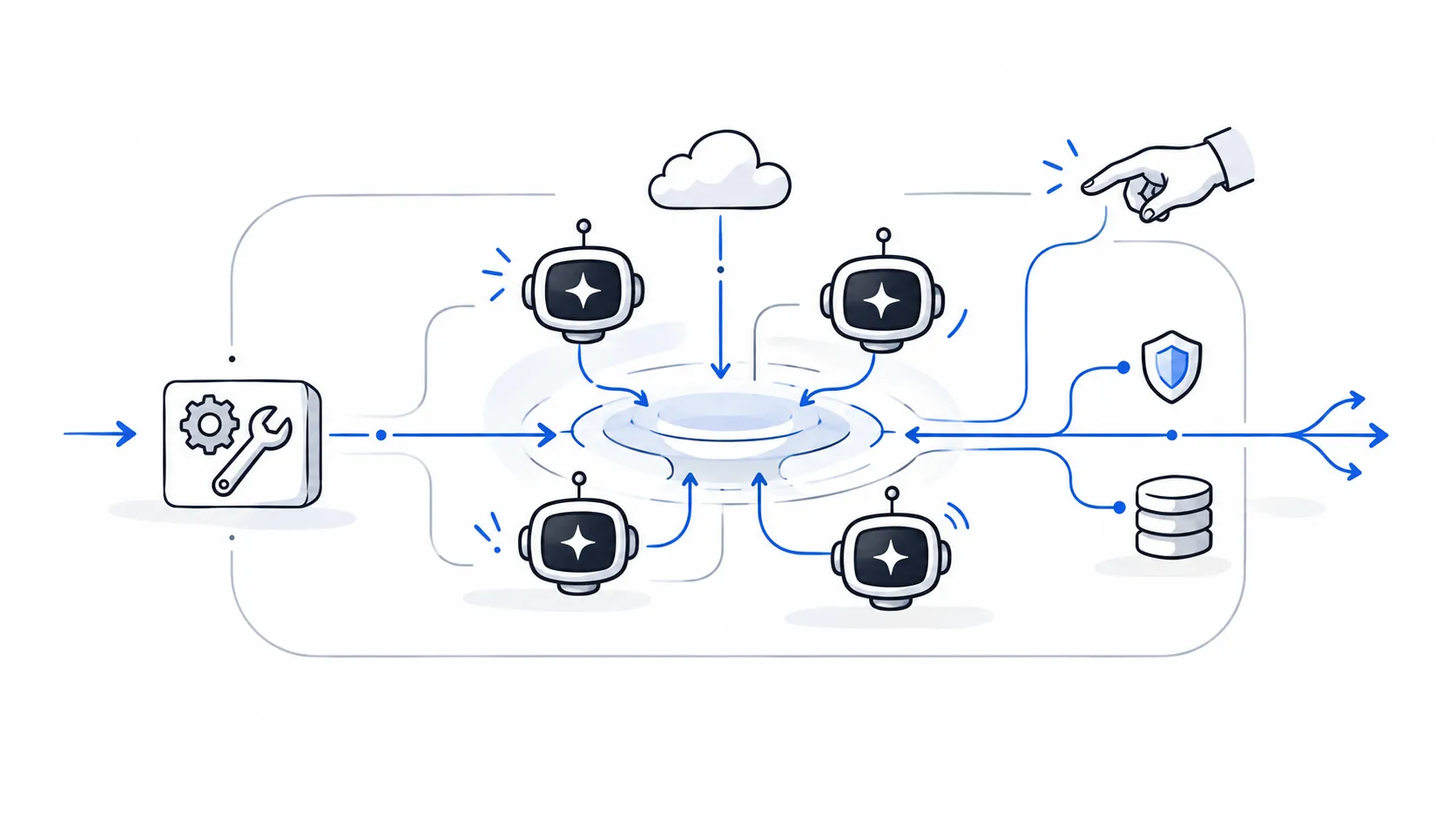
Agentic System Design is an emerging discipline built largely on familiar engineering problems. What differs between ecosystems is where the responsibility for solving them sits, and what each one calls it.
Responsibility moves
What one team writes in application code is a framework feature in the next ecosystem and a managed service in a third. Those boundaries also move over time.
Terminology diverges
Memory, session, runtime, gateway — even agent — name different abstractions in different ecosystems. Each naming implies a different boundary of responsibility.
Features do not compare
Two product names rarely describe the same thing. The engineering decision behind them does: the trust model, the operational cost, what runs underneath.
How we study
Study each ecosystem on its own terms before generalizing what repeats.
- Learn
- Understand
- Compare
- Transfer
- Generalize
What we're studying now
Phase 1 studies five ecosystems through their professional certifications.
A certification is a lens into an ecosystem, not the ecosystem itself. An exam blueprint is a structured statement of what the organization behind an ecosystem expects a qualified practitioner to understand and decide.
Explore certifications
Google Cloud

AWS

Microsoft

Anthropic

NVIDIA
Follow the project
New guides and ecosystem studies as they are published. No other mail.